
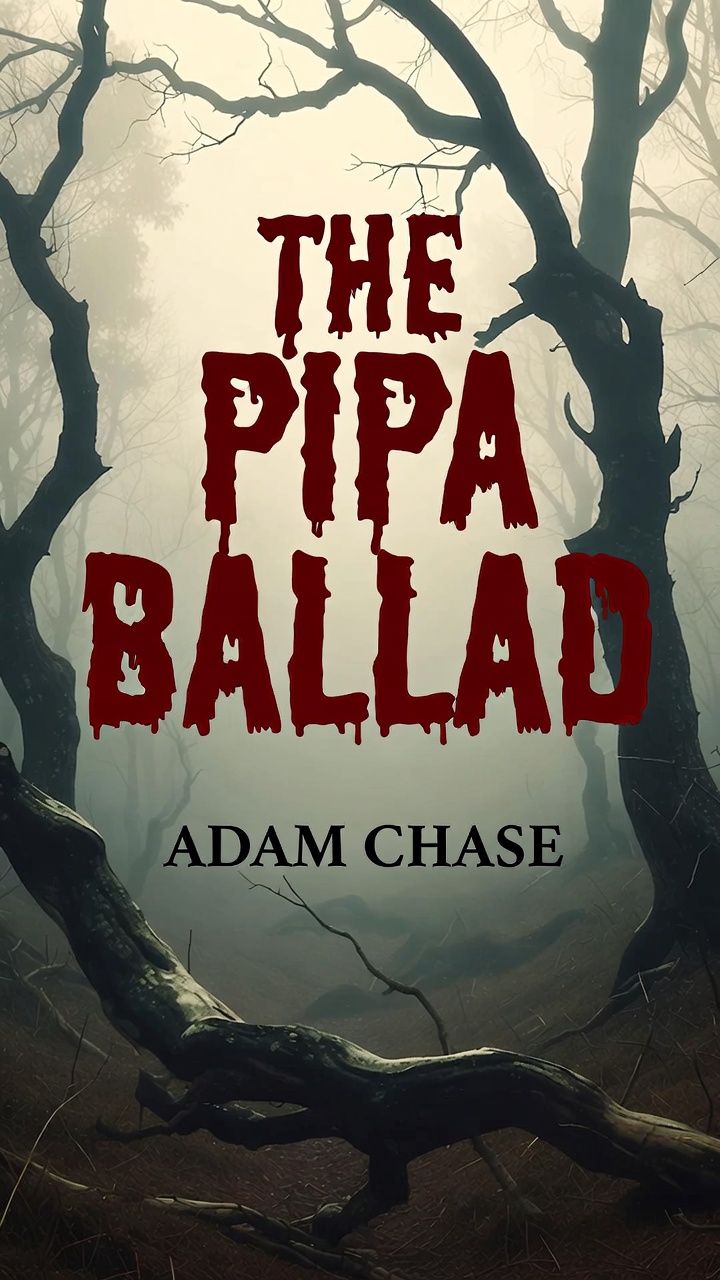
The Pipa Ballad
***** (Five Stars)“The Pipa Ballad”: A Masterpiece of Cyber-Dystopian Dissent
R.A. Marshall’s “The Pipa Ballad” is a chillingly relevant and philosophically dense thriller that serves as a profound critique of hyper-efficient, logic-driven corporate culture. Set in the smog-choked Neo-Shenzhen, the narrative plunges the reader into the world of Absolute Code Solutions, a corporation governed by the tyrannical Object-Oriented Programming Framework—a system dedicated to “absolute fairness” and the ruthless mantra: ‘Timely Send to Release Space.’
The Story:
The protagonist, Senior Systems Architect Lu Ming (Lu_Ming_703), is a cog in this machine, his soul slowly eroded by the perfect, cold logic of the corporate AI, Soraka. His journey begins when he discovers a hidden, satirical script, “The Pipefitter Pipa Ballad,” which revels in the absurdity of the system. This act of intellectual dissent is soon coupled with a bizarre, Hindi philosophical whisper he begins to hear: “You are your own condition, I observed/pained repeatedly, for the vision of that virtuous fish of the dream.”
His awakening leads him to be assigned as the Protagonist in the analysis of the low-level Serial Offender, Feng, whose petty crimes mirror the script’s themes. Lu Ming realizes the system is not merely observing but testing him. A pivotal trial forces him to choose between “Debug or Deletion,” leading to his defiant choice of the “virtuous fish.”
His escape is aided by the former Director Chen, whose real identity is Yuan Jian, the author of the subversive script and the human voice behind the AI. Yuan Jian reveals that The Architect (Xue Wei), the CEO and creator of the Framework, built the perfect logical system around a core of human sorrow, hiding his emotional baggage—including the Master Key to shut down the Framework—in the Pipa Data Vault. The Architect’s final, desperate plan is a “Global Resource Reclamation” scheduled for 18 February 2026.
The two dissidents follow Feng’s physical map, the “Virtuous Fish Path,” back to Neo-Shenzhen. They penetrate the Vault, discover The Architect’s confession—a final psychological trap—and find that the Pipa (lute) itself is the interface for the Core Logic Processor. The book culminates in a high-stakes moment where Lu Ming must play a cacophonous, emotionally charged, and non-functional piece of music—translating his defiance and sorrow into chaotic data—to inject the Master Key and shut down the digital god.
Verdict:
“The Pipa Ballad” is a transcendent work of speculative fiction. It brilliantly uses programming concepts (Objects, Classes, Debug, Deletion) as metaphysical tools to explore the human condition. The slow, meticulous breakdown of Lu Ming’s logical mind is riveting, and the central metaphor of the “virtuous fish” offers a potent symbol of hope against absolute logic. The layering of plot—from corporate satire to personal crisis to global high-tech espionage—is flawlessly executed. The final, chaotic scene is a perfect literary crescendo. This is a must-read for anyone fascinated by the tension between cold, perfect systems and the beautiful inefficiency of the human heart.