
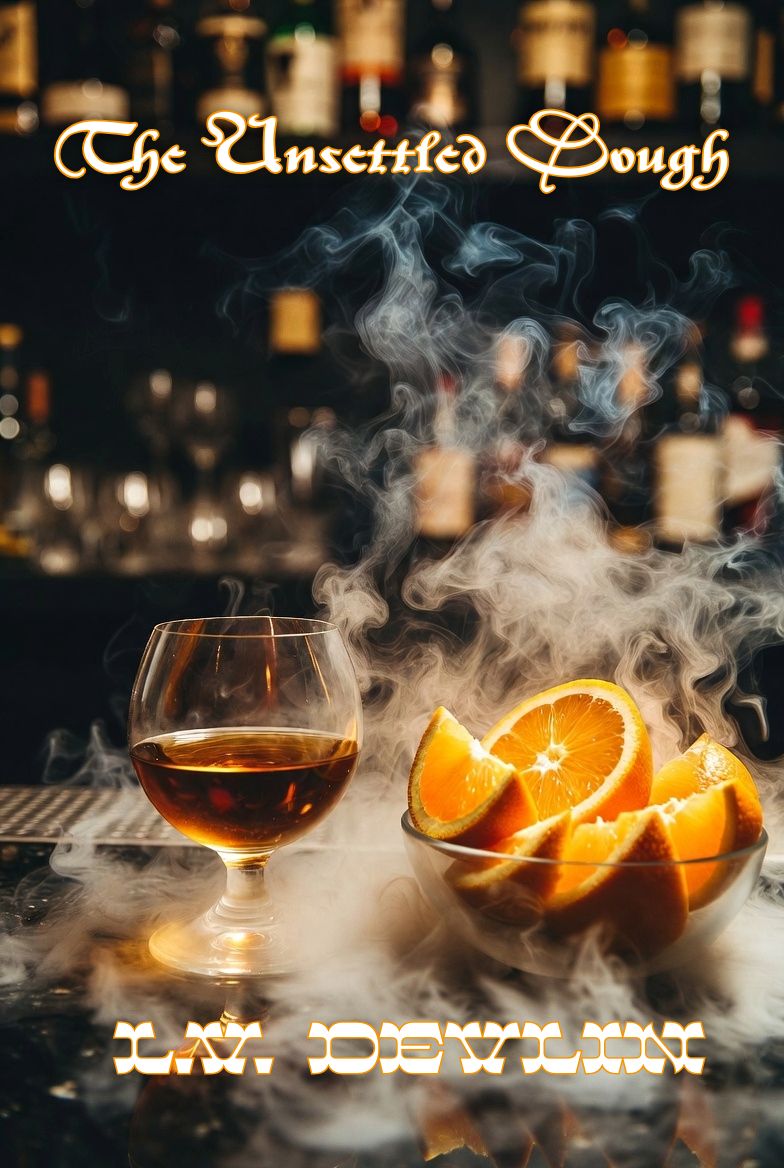
The Unsettled Dough (by L.V. Devlin)
Book Review: The Unsettled Dough
This is a blistering, high-octane novel that expertly fuses the gritty energy of the Northern English underground with the cynical menace of corporate espionage. The Bread Maker’s Ballad is less a conventional thriller and more a philosophical, flour-dusted manifesto on the dual lives we all lead.Plot and Pacing
The story immediately plunges the reader into the chaotic world of Nate Wilkins, a baker whose sandwich shop, “The Crusty Counsel,” is a front for supplying Leeds’s legal elite with both artisanal bread and illicit escape. The initial, frantic sequence—a high-stakes drug run across the Pennines necessitated by a “logistics issue” for a massive rave—establishes a relentless, exhilarating pace. This plot, however, serves as a brilliant misdirection, as the narrative pivots seamlessly from back-road crime to high-level corporate warfare. Nate’s final, forced recruitment by the rival firm, Blackwood & Finch, transforms the novel into a unique thriller of professional sabotage, where “logistical failure” and “bureaucratic error” become the ultimate weapons. The climax—a stunning act of betrayal executed in a clean suit—is a perfect, cynical punchline that satisfies both the heist and character arcs.Characters
The cast of “the magnificent four” provides the novel’s kinetic energy and heart:
- Nate Wilkins: The protagonist is a compelling study in contradiction. He is the anchor, the provider, and the man defined by his craft, yet he is addicted to the “glorious filth” of his nocturnal life. His progression from baker to chaotic saboteur to clean-suited corporate asset is the engine of the story.
- Louis Stevens: The Scottish paralegal and Head of Intelligence is the book’s intellectual showman. His constant, theatrical philosophical monologues—often justifying reckless hedonism with Heideggerian concepts—provide sharp, dark humor and an intellectual commentary on the action.
- Melissa: Nate’s ex-wife and “the Bird,” the reckless getaway driver, is a force of nature. She embodies pure, unapologetic risk, providing the plot with its initial, necessary velocity and leaving behind a captivating, dangerous ghost.
- Ria and Clarissa Devenue: The sisters round out the crew, with Ria providing the sharp, pragmatic efficiency and Clarissa serving as the brilliant, perpetually distracted philosopher, finding “existential authenticity” in the most chaotic moments.
Style and Tone
The book’s style is its greatest strength. It is a frenetic, cynical, and richly detailed narrative that combines the gritty realism and energy of British counter-culture novels with sharp, almost literary observations on class, commerce, and existentialism. The dialogue is snappy, profane, and incredibly witty, particularly Louis’s intellectual banter. The novel uses concepts like “Being-in-Itself” and “Noumenon” not as academic footnotes, but as active tools for understanding (and justifying) reckless behavior, giving the fast-paced action a surprising depth. The language is raw and vibrant, perfectly capturing the dichotomy between the “rancid Rover” and the “impeccably tailored” suit.Core Themes
- Dual Identity: The central theme explores the impossible divide between Nate’s honest, arduous craft (baking) and his secret life of anarchy and crime. The flour-dusted apron becomes the perfect camouflage for profound transgression.
- Anarchy vs. Order: The book argues that chaos is not the opposite of order, but a necessary, subsidized component of it. The “glorious filth” of the rave is funded by the “bland legal mediocrity” it allows its participants to endure.
- Economic/Class Commentary: The novel is a scathing look at the hypocrisy of the upper-middle class, who rely on the working-class protagonist to supply them with both their sustenance and their escape.
- The Geometry of the Getaway: Every action, from driving to bribing, is framed in terms of “geometry,” “vectors,” or “logistics,” giving the most emotional decisions a cool, analytical logic.
Overall Assessment
The Bread Maker’s Ballad is an exhilarating and intelligent read. It is a novel that thrives in its contradictions, making the smell of yeast and the thrum of a techno bassline feel equally vital. It is a cynical, funny, and deeply satisfying story about choosing your own kind of chaos. The ending is particularly strong, as Nate makes a final, perfect move that secures his place not just within the narrative, but firmly against the very system that tried to buy him. Highly recommended for readers who enjoy thrillers with a razor-sharp wit and a philosophical edge.